Heels: Diva or Disaster?
Wednesday, 5 January 2011


How effective is the combination of your main product and ancillary texts?
This is our voiceover script for our documentary.


I think our ancillary texts were effective within the combination of the whole product, as they got the highest feedback out of everything in the audience feedback questionnaire. However if we were to reproduce the radio trailer, I would make sure again, that all the sound beds were the same, so there were no jumping up and down from different levels. If I were to repeat the print ad I would change the background of the advert, so that it connoted more towards 'diva' and glamour.
Audience Appeal
As our product is a Channel 4 production, we could not advertise on any of the BBC radio stations, therefore we picked non biased radio stations. Therefore we decided that our radio trailer would be played on Real Radio, Smooth and Heart FM as they would help attract a wide range of audience as they are very popular radio stations, for the whole age range of our target audience.
We also decided we would place our print advert in the Daily Mail, Daily Mirror and The Sune as it will attract a wide range of audience, plus they are three very popular newspapers, with wide target audience ranges.
What have you learned from your audience feedback?
We gave a sample of our target audience a questionnaire to fill out having watched our product.
The questionnaire contained questions such as the following;
- On a scale of 1-5 how would you rate this documentary? (1 being poor, 5 being excellent)
- On a scale of 1 to five how informative was the documentary?
- If you saw the print advert, would it make you want to watch the documentary?
- Did the documentary follow the conventions of a professional documentary?
- Did the radio advert attract your attention, and make you want to watch the documentary?
- Is this a documentary you would watch?
The lowest feedback number, on the 1-5 scale, was a 3, which gave us a positive outcome, as it shows that our target audience enjoyed the final product, and it was successful. We were therefore pleased with the outcome on the feedback, as no one found it disappointing, boring or not similar to real documentaries. The ancillary task was shown to be the most popular, as it produced the highest score.
The following video is audio feedback of one member of our sample, Laura Woods, an 18 year old female, answering our questionnaire.
We also added our products to our Facebook pages, asking our Facebook friends to watch and add comments and criticism on the products.
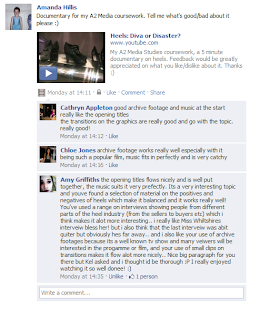
The above picture are the comments on the documentary itself.
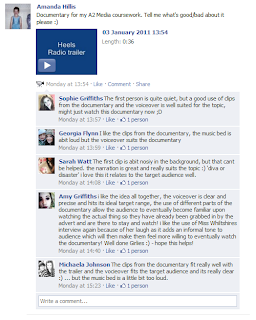
The above picture are the comments we received on the radio advert.
Other comments we received from our sample that gave us feedback on our finished products where;
"the opening titles flow nicely and is well put together, the music suits it perfectly. It's a very interesting topic and you've found a selection of material on the positives and negatives of heels which make it balanced and it works really well! You've used a range of interviews showing people from different parts of the heel industry (from the sellers to buyers etc) which i think makes it alot more interesting. well done!"
"Good opening title, and like the sex and the city archive footage. the music used really suits the topic and the cutaways used suit the topic :) really good."
"I like the opening title and the montage of sex and the city is really suitable to what is being said on the voiceover :)"
"Shots and the transactions are fabulous, also mise en scene for interviews are fitting with topic. Only Problem is the title of the person speaking looks awkward, only because I thought it was meant to be the opposite sideee to the interveiwee. The music also suited the topic well"
Most of the comments that we received were of a positive nature, with few criticisms, which shows us that we succeeded in making our product look professional. However, we could understand criticism made, as we could not make it completely professional as we do not have the equipment and material that is used to make professional documentaries.
Below are pictures of one of our small sample groups, participating in a feedback session.


How did you use media technologies in the construction and reserach, planning and evaluation stages?
To plan our documentary we used the internet and Microsoft word, which enabled us to get the information that we needed to plan and research for our documentary. We used these for creation of our questionnaires, information and history on heels and contact information of interviewees.
I also used Microsoft Excel to produce the pie charts for our questionnaire results, which made it easier to present them, and they were easier to understand as pie charts, rather than a paragraph.
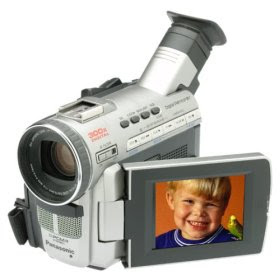
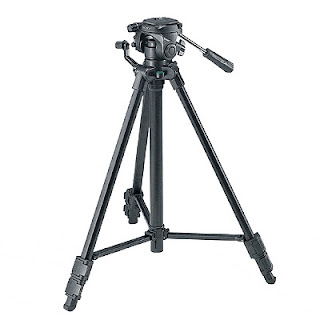
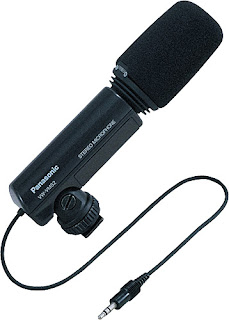
When we began filming, we used a video camera, tripod for cutaways, and a microphone for the interviews and voxpops. The tripod enabled us to have steady camera work, as this is an important aspect of footage in a documentary, and the microphone enabled us to have louder footage of the interview, and also better quality.
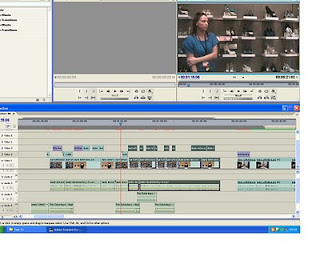
Adobe Premier Pro was the programme that we used to edit our
footage, allowing us to cut and link clips together, add text and graphics to clips, add music beds and cutaways into our documentary. We all had equal time when we edited, so that we all got to use the programme, and get used to the tools. we also helped each other in the process, which made it easier as a lot of the time if one person was stuck another knew the solution, so this sped the process up. We were introduced to new tools, however we got used to
them quickly, and I found it very enjoyable to edit.
Below are some screengrabs of our editing process on Premier Pro.

We used Adobe Photoshop for the newspaper advert, and having used this programme in both GCSE and AS Level, it was not as hard as it would of been if it was new to us. However we had a more challenging product to produce than we have done before.
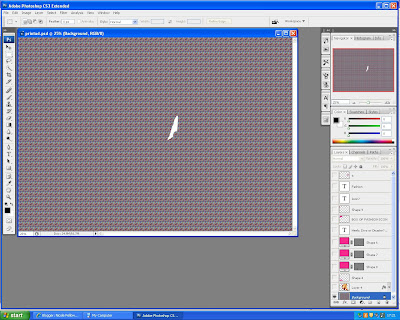
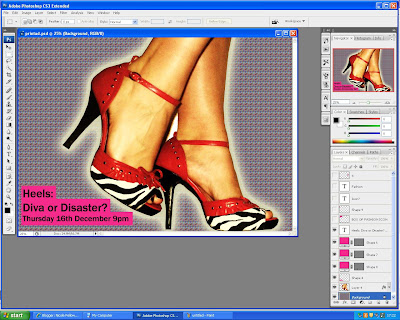
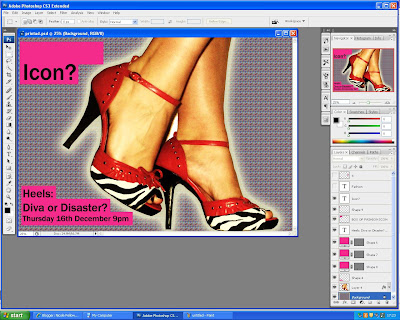
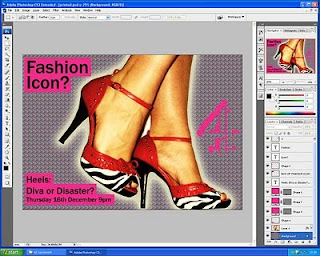
Below is a screengrabs of the process
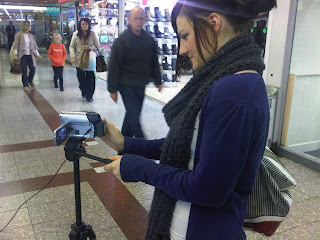
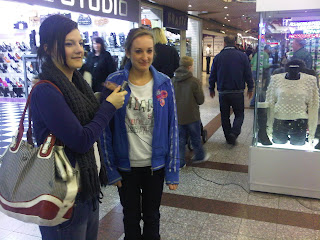
Throughout the filming process, we continued to take photographs on our mobile phones, as evidence that we were the ones to film the footage. And we also used a stills camera to take pictures of the audience feedback.
Examples of these pictures of evidence are below;

From the beginning of the coursework, I have used Blogger, to record the process and upload my work in order to present it. By using Blogger, I have used new technologies, such as uploading videos and images, which at the beginning was a challenge, as I am not a frequent blog user. However I found it got easier throughout the process as I got more used to the website.
We also used the Ice radio recording studio, as we are lucky enough to have a soundproof, radio booth in our school, that enabled us to record our voiceovers for both our documentary and radio advert. This was completely new technology, as I have never used that technology before, therefore i learnt how to record in the studio, and how to listen back to it, to check it. This allowed us to produce a high standard of quality for our voiceovers as the technology is advanced.
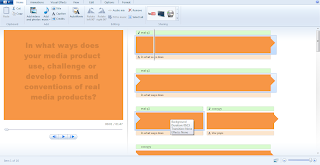
I used Movie maker in order to produce my evaluation videos, as it is built into my laptop. I found it difficult to work at times as it is the newer version, which I had not properly used. However after a while, it became quite simple to use, which enabled me to make the videos for my evaluation more interesting than just having writing. I recorded the sound for this on my mobile phone and used a converter on my laptop in order to import it into Windows Movie Maker.
Monday, 3 January 2011
Photo evidence of filming


The above pictures are filming voxpops in St John's shopping Centre, Liverpool, by a variety of women's fashion, clothes, beauty and sho shops. We used medium long shots when filming our vox pops, and we allowed the interviewer to be in the shot, therefore we could not use this footage as it did not follow the codes and conventions of documentaries and would of lost marks.


The above pictures we filmign cutaways in BU, a fashion and shoe shop, in St John's Market, Liverpool.

The above picture is filming cutaways in a shoe shop in Liverpool.

The above picture is filming the interview with Graham Carter.
Sunday, 10 October 2010
Drafts of Newspaper Advertisements
These are the print ad ideas that we came up with, before deciding on a final idea and taking the pictures


This was our final idea for our newspaper advert, as it left the question open to the audience, letting them decide if heels are 'diva or disaster', this was because it only showed the audience the glamorous side of heels. We also decided against taking a picture for 'disaster' as when we tried to portray disaster, it did not work in the way we wanted it to, and it would not of been easily understood by the audience.
The images below are other drafts of print ads that we thought up, but we decided against.


We did not chose to use these 4 ideas, as they all had a plain, bland background, that we felt would not of worked well ona print advert, as it would of been left to look boring, and could have made the audience less enthused about the programme.
We would advertise the print adverts in the following newspapers;
- The Daily Mirror
- The Daily Express
- The Sun
Saturday, 9 October 2010
Codes and Conventions of Newspaper Advertisements
Trailer and print advert need to be from the same campaign - same theme, same slogan etc.
Colour block - bottom left hand corner of channel 4 logo.
Bold central image.
Title is printed.
Positioning statement -> Fashion Icon?
One strong key image.
Words kept to a minimum.
Slogan.
Channel logo.
Scheduling
Colour block - bottom left hand corner of channel 4 logo.
Bold central image.
Title is printed.
Positioning statement -> Fashion Icon?
One strong key image.
Words kept to a minimum.
Slogan.
Channel logo.
Scheduling
Friday, 8 October 2010
Scripting Radio Trailer

This is our script for our radio trailer voiceove. We recorded this in the Ice Radio recording studio, using Chloe Jones as our voiceover.
The stations we would broadcast the advert on would be;
- Heart Radio 106.2
- Smooth Radio 100.4
- Real Radio
Codes and Conventions of Radio Trailers
Ended with a different voice explaining when and where it will be shown.
Sound effects are used.
Uses a voiceover that we assume is from the documentary.
Takes extracts from the documentary.
Music bed that relates to the topic.
Make sure the beginning is clear
Sound effects are used.
Uses a voiceover that we assume is from the documentary.
Takes extracts from the documentary.
Music bed that relates to the topic.
Make sure the beginning is clear
Scripting Documentary Voiceover

This is the voiceover script of our documentary, we recorded this using Ice Radio recording studio.
Thursday, 7 October 2010
Edit Decision List
The following is the edit decision list, that we decided from our tape logs sheets, which is the order that we will run our documentary.


Subscribe to:
Posts (Atom)